
Bending the Arc references a quote by Rev. Dr. King who said, “The arc of the moral universe is long, but it bends toward justice.” This digital newsletter from the CSA Justice, Peace, and Integrity of Creation office showcases the work of changemakers, opportunities to learn, and opportunities for you to help “bend the arc” toward justice. Full contents of the newsletter are published on this page.
Subscribe to get Bending the Arc in your inbox.
Archives - September 2026
Food Waste Prevention Week
September 29, 2026
Food Waste Prevention Week is September 28 - October 4.
The Wisconsin Department of Natural Resources (DNR) is encouraging residents to celebrate this week by using simple tips to keep food waste out of Wisconsin landfills while saving money.
The DNR’s 2020-2021 statewide waste characterization study found that wasted food was the largest component of trash in Wisconsin. Wasted food is defined as edible food thrown away before it is eaten or because it is spoiled. When food scraps like banana peels were included, approximately 854,000 tons of food waste and scraps, or 294 pounds per Wisconsinite, were sent to the state’s landfills in 2020.
When this food waste breaks down in landfills, it produces methane, a potent greenhouse gas. Households contribute heavily to this, with food waste making up 30% of residential trash. The Environmental Protection Agency (EPA)’s recent report, "Estimating the Cost of Food Waste to American Consumers," found the cost of food waste to each U.S. consumer to be $728 per year.
“Through food waste prevention, Wisconsinites have a major opportunity to make a positive impact on the environment while saving money on their grocery bills,” said Kate Strom Hiorns, director of the DNR’s Waste and Materials Management Program. “Food Waste Prevention Week is a great time to look at how you can reduce the amount of food you throw away.”
Here are just a few of the ways you can be a food waste hero and reduce your impact:
- Understand date labels and when food items are actually unsafe. Date labels are not regulated by federal law and do not indicate food safety, with the exception of infant formula. Manufacturers provide dates to help consumers and retailers decide when food is of peak quality. The U.S. Department of Agriculture advises consumers to examine foods to determine if the quality is sufficient for use. Relying on your eyes and an old-fashioned sniff test can be a better indicator of whether food is good to eat and help you avoid disposing of healthy and safe food.
- Shop with a plan and prepare for gatherings. Buying more food than what is needed often leads to more food waste. You can reduce wasted food by checking your pantry for must-use items before shopping and creating a meal plan for the week based around them. It also helps to make a specific list and avoid shopping on an empty stomach to avoid impulse buying. Use the UW Extension Seasonal Availability of Wisconsin Fruits and Vegetables to guide your produce purchases and create your list and meal plan before heading to the store.
- Store food to extend its life. Proper food storage can reduce waste and save the time and money associated with additional grocery store runs. Proper storage paired with planning can reduce waste and save time and money associated with grocery storage. Save the Food's Store It Guide offers tips and tricks for storing food, and the Natural Resources Defense Council’s The Refrigerator Demystified sheet helps you properly organize your fridge.
- Start your journey! No matter when or why you want to get involved with food waste prevention, you have to start somewhere. The EPA’s Get Smart: Take the Challenge helps households determine their baseline food waste amount so they can track their habits and develop new strategies to reduce waste.
For more details and additional tips, visit the DNR's Reducing Food Waste at Home webpage or the official site for Food Waste Prevention Week.
Posted in
Cosmology & Creation
Keeping Students Safe from Trafficking
September 04, 2026
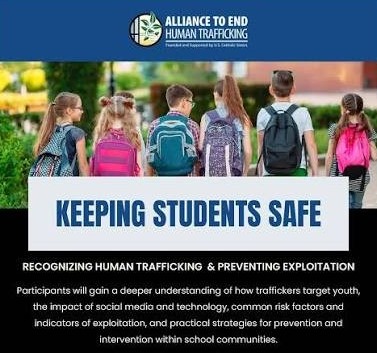
Trafficking is an affront to human dignity. The Alliance to End Human Trafficking works to bring further awareness to the many concerning pieces of human trafficking.
If you missed their August 27 webinar, Keeping Students Safe: Recognizing Human Trafficking & Preventing Exploitation, you may be interested in the recording, which is available now on their YouTube channel.
After watching the recording, you may be interested in these resources to learn more about human trafficking in the sports industry:
Posted in
Trafficking & Migration
Wild Rice Week
September 01, 2026
Gov. Tony Evers, together with Wisconsin Department of Natural Resources (DNR) Secretary Karen Hyun and Bad River Band of the Lake Superior Chippewa Chairwoman Liz Arbuckle, yesterday joined members of the Wild Rice Stewardship Council and stewardship advocates on the Bad River Reservation to celebrate Wisconsin’s first-ever “Wild Rice Week” to raise awareness of and appreciation for the value of wild rice in the state.
Wild Rice Week was established by Executive Order #277, which was signed by Gov. Evers last year as part of the Evers Administration’s Indigenous Peoples’ Day celebrations to build upon previous efforts of the Administration to reaffirm the state’s commitment to respecting Tribal sovereignty and fostering strong government-to-government relationships by bolstering the education and awareness of Tribal Treaty Rights and sovereignty and promoting stewardship to protect cultural wild rice resources.
“Wild rice is a critical part of food security and culture for many Native Nations, and preserving and celebrating the long-established practice of wild rice stewardship in our state is essential to strengthening our government-to-government relationships and our efforts to protect our natural resources,” said Gov. Evers. “My administration and I are committed to ensuring the state is a strong partner in supporting and respecting Tribal sovereignty, treaty rights, cultural practices, and food resources. This week, and every week, we recognize the importance of this resource as well as the hard work of our Tribal partners, advocates, and those who have been hunting and gathering from these lands and waters for centuries to protect wild rice in Wisconsin and ensure its presence for future generations.”
“Wild rice is an important natural resource in Wisconsin, supporting healthy wetlands as a food source and habitat for wildlife and serving a vital role in the culture, identity and spirituality for many Tribal Nations in Wisconsin,” said DNR Secretary Hyun. “Protecting wild rice benefits both the health of our waters and the strong traditions tied to it.”
Read the full online version of this release here.
Posted in
Cosmology & Creation
October 26 - Monday
October 27 - Tuesday
03:00 PM - 04:00 PM
October 28 - Wednesday
October 29 - Thursday
October 30 - Friday
October 31 - Saturday
November 1 - Sunday
November 2 - Monday
November 3 - Tuesday
12:00 AM - 11:59 PM
November 4 - Wednesday
November 5 - Thursday
November 6 - Friday
November 7 - Saturday
09:15 AM - 11:30 AM
01:00 PM
November 8 - Sunday
November 9 - Monday
November 14 - Saturday
November 15 - Sunday
04:00 PM - 05:00 PM
November 17 - Tuesday
03:00 PM - 04:00 PM
December 5 - Saturday
09:15 AM - 11:30 AM
01:00 PM
December 13 - Sunday
04:00 PM - 05:00 PM