Bending the Arc references a quote by Rev. Dr. King who said, “The arc of the moral universe is long, but it bends toward justice.” This digital newsletter from the CSA Justice, Peace, and Integrity of Creation office showcases the work of changemakers, opportunities to learn, and opportunities for you to help “bend the arc” toward justice. Full contents of the newsletter are published on this page.
Subscribe to get Bending the Arc in your inbox.
Restore TPS for Haitians
October 23, 2026

Faith leaders are encouraged to sign on to a letter urging their Senators to co-sponsor and support S.4814 that will extend Temporary Protected Status (TPS) for Haitians for three years. The Department of Homeland Security terminated TPS for approximately 350,000 Haitians in the United States effective July 27, 2026.
Extending TPS would allow our Haitian neighbors to continue to live and work legally and safely in the United States while supporting their families and contributing to their communities. Without TPS, they face possible detention and deportation to Haiti, where rampant gang violence, food insecurity, limited access to healthcare, and the breakdown of rule of law have created dire conditions.
The Congregation of Sisters of St. Agnes continues to respond to those whose faith life or human dignity are threatened, and their Leadership Team has co-signed this letter. Other faith leaders, religious organizations, and congregations can join them by adding their name to the letter. Organizations are urged to sign on no later than 12:00 pm ET Tuesday, October 27.
A documentary debuted on PBS this week that includes firsthand footage in Haiti and interviews with Haitians there are locally in Springfield, OH. This film is highly recommended.
Posted in
Equity & Human Dignity
Election Novenas
October 23, 2026
The group, Catholics in Communion, is offering a Virtual Election Novena to pray, reflect and act in communion November 1 through November 9 at 6:30 pm CT each of the nine evenings. Together, participants will pray utilizing the USCCB's Novena for Faithful Citizenship, share prayers of the faithful, check in with local communities holding vigil across the country, and hear about the latest election related news and opportunities to act to ensure all citizens can meaningfully participate and all legal votes are counted. Sign up for resources. You will be emailed the Zoom link after you register.
Additionally, The Leadership Conference for Women Religious (LCWR) will be offering an Election Novena October 26 - November 5 with a virtual prayer vigil throughout the day on November 3 - Election Day. A 10-minute contemplative prayer will be posted for each day on the LCWR website. The daily prayer will be posted by 7:30 pm on the preceding day, with the first posting on Sunday evening, October 25. The daily posting will allow the prayer to be responsive to what is happening in our world, in our lives, and in our congregations.
On Election Day, November 3, LCWR will also be offering a virtual 24-Hour Prayer Vigil. Simply join with this Zoom link any time during the day, 12 am - 12 pm.
The USCCB offers these 10 Ways You can Take Action for Faithful Citizenship, which includes this novena.
Posted in
Unity & Common Ground
Prayer and Action on Behalf of Those Facing Execution
October 23, 2026
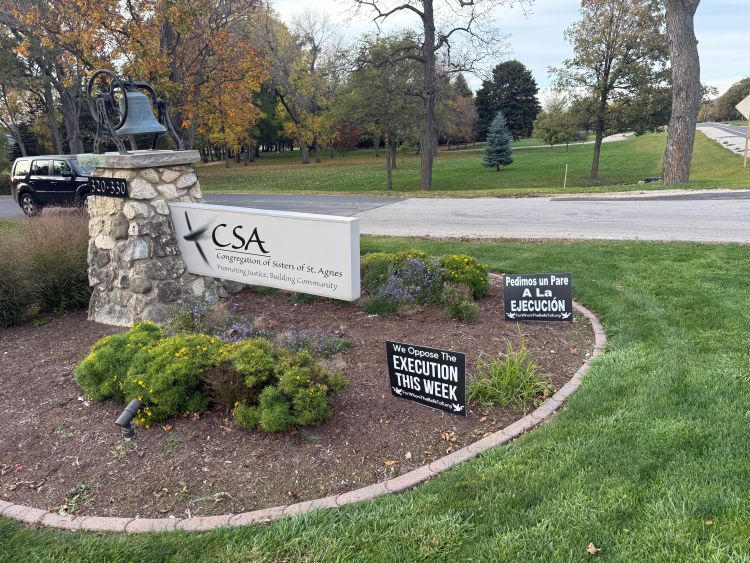
Jeffrey Weisheit is scheduled to be executed on November 5 by the state of Indiana for the murders of Alyssa and Caleb Lynch. Please hold Jeffrey, Alyssa, Caleb, their families, and the people of Indiana in prayer.
TAKE ACTION
Michael Taylor is scheduled to be executed on November 5 by the state of Alabama for the murders of Ivan and Lucille Moore. Please hold Michael, Ivan, Lucille, their families, and the people of Alabama in prayer.
TAKE ACTION
Jesse Guardado is scheduled to be executed on November 5 by the state of Florida for the murder of Jackie Malone. Please hold Jesse, Jackie, their families, and the people of Florida in prayer.
TAKE ACTION
James Pavatt is scheduled to be executed on November 12 by the state of Oklahoma for the murder of Rob Andrew. Please hold James, Rob, their families, and the people of Oklahoma in prayer.
TAKE ACTION
John Allen Rubio is scheduled to be executed on November 12 by the state of Florida for the murders of Julissa Quesada, John E. Rubio and Mary Jane Rubio. Please hold John, Julissa, John E., Mary Jane, their families, and the people of Florida in prayer.
TAKE ACTION
Reinaldo Dennes is scheduled to be executed on November 19 by the state of Texas for the murder of Janos Szucs. Please hold Reinald, Jano, their families, and the people of Florida in prayer.
TAKE ACTION
Nidal Hasan is scheduled for execution by the U.S. Military on December 3, for the Fort Hood shooting in Texas, in which he killed 13 soldiers and injured 32 others. Please hold Nidal and all service members and their families in prayer.
Nidal Hasan's stated motivation is to become a martyr. Executing him fulfills that wish, providing him a platform to inspire other religious extremists to replicate his action. Throwing away the key on him will provide severe punishment while not giving him a platform to inspire more terrorist attacks.
If carried out, this would be the first U.S. Military execution since 1961, and it comes at a time when the public is becoming more and more concerned about the use of the death penalty in light of recent failed executions, as well as with a number of other problematic issues regarding mental illness, race, intellectual disability, problematic attorneys and judges, and more.
Want to do more? Please consider attending First Friday Prayer Vigils with Catholic Mobilizing Network. The next vigil is scheduled for November 6, 2026, at 1 p.m. CT, featuring a Scripture reflection from Most Reverend Jaime Soto of the Diocese of Sacramento.
You can also take action and oppose upcoming executions at https://catholicsmobilizing.org/our-work/death-penalty/executions/
The Congregation of Sisters of St. Agnes goes on record as being opposed to the death penalty.
Posted in
Death Penalty & Restorative Justice
Legal Settlement Protects Wild Rice on Menominee Reservation
October 23, 2026
A recent report from Midwest Environmental Advocates shares the great news that, with their help, the Menominee Indian Tribe of Wisconsin has reached a settlement in a lawsuit against the Wisconsin Department of Natural Resources (DNR) over the proposed use of an aquatic herbicide that threatened wild rice beds within the Menominee Reservation.
The case began in February 2025 when Legend Lake Protection and Rehabilitation District applied to the DNR for a permit to treat parts of Legend Lake with an herbicide known to harm wild rice. The Tribe challenged DNR’s decision to issue the permit, which led to months of negotiations.
The Tribe’s connection to wild rice—and its interest in managing Legend Lake—is difficult to overstate. “Menominee” literally translates to “wild rice people.” Legend Lake was created in the 1960s as part of an economic development plan following the termination of the Tribe’s federal recognition. The project dammed and dredged eight natural lakes where wild rice had historically flourished. Legend Lake’s legacy remains intertwined with the Tribe’s sovereignty and efforts to restore wild rice.
Under the settlement finalized in September, the DNR will no longer permit chemical herbicides where wild rice is growing or being seeded, or in designated sensitive aquatic habitats. The agency also agreed to update sensitive area designations based on Tribal input and consult with the Tribe before approving future chemical applications.
Posted in
Cosmology & Creation
Nonviolence and the Struggle for Justice and Peace in Palestine
October 23, 2026
On Saturday, November 14, 2026, at 11 am CT in the U.S. and 8:00 pm in Jerusalem, Lutheran Peace Fellowship is hosting a conversation with Bishop Dr. Munib Younan, former President of the Lutheran World Federation and retired Bishop of the Evangelical Lutheran Church in Jordan and the Holy Land. You are invited to attend. Registration required at https://us02web.zoom.us/meeting/register/3FNwOh79TSKscSbU3QnnOg.
You can prepare by watching Stolen Stories | Episode 1: Nakba | ELCA Sumud
“Stolen Stories” is a 5-part educational video series, produced by ECLA Samud. In these short videos you can listen to the voices of Palestinian Christians as they recount their historical narrative from pre-1948 to present day. This series highlights the important perspectives of our Palestinian siblings in Christ and lifts up the experiences of Palestinians-- especially the indigenous Christians of Palestine and Israel-- in their own words. In “Stolen Stories”, Palestinian Christian pastors, bishops, and scholars offer important contextual, historical, and theological framework that continues to shape life in Palestine and Israel today.
Posted in
Peace & Nonviolence
Speak Up For Immigrant Children Facing Court Alone
October 23, 2026
After the administration ended a contract that paid attorneys to represent unaccompanied minors, more than 20,000 children have been left to represent themselves in immigration court, before a judge and government prosecutor speaking often in a language they don't know. The Fair Day in Court for Kids Act (HR 9259/S 1297) would ensure that every unaccompanied minor who faces immigration court is represented by a lawyer and not alone in the process. Join the United Church of Christ and tell Congress to pass this important legislation.
Posted in
Trafficking & Migration
The Hidden Story of How Big Oil Invented the American Dream
October 23, 2026

Grist is an independent news magazine who reports on the climate and environment and their intersections with energy, policy, food, extreme weather, and more.
They’ve dug up a century of evidence that shows how fossil fuel companies sold a vision of prosperity - from the family care to the dream kitchen - that depended on their own products.
We are literally prisoners of this system that fuels climate change and unhealthy conditions. How can we extricate ourselves and Earth from the ongoing damage? The following article by Grist Magazine's Kate Yoder examines how this happened to us under the radar in many pervasive ways. Read the full story.
Posted in
Cosmology & Creation
Fighting PFAS and Ensuring Clean, Safe Water for Wisconsinites
October 23, 2026
In an October 22, 2026, press release, Wisconsin Governor Tony Evers announced funding to help 12 communities remove over 15,000 lead service lines to ensure clean, safe drinking water. More than $102 million has been allocated for financial assistance through the Lead Service Line Replacement Program.
Read the full announcement and learn which municipalities have been selected to receive funding.
Also on this day, Gov. Evers delivered a radio address celebrating the launch of two new programs to fight PFAS statewide. The programs will provide funding to help communities sample private wells and public water supplies for PFAS contamination. The two grant programs are funded by the $125 million PFAS Trust Fund, which was previously approved in the 2023-25 Biennial Budget but languished unspent in Madison for years despite the governor’s persistent demands for the funds to be released. Earlier this year, that funding was released thanks to 2025 Wisconsin Acts 200 and 201, which were signed by Gov. Evers. Read the full press release.
The Congregation of Sisters of St. Agnes applauds these commitments to care for Earth, home of all living creatures.
Posted in
Cosmology & Creation
2027 Adopt-a-Highway Dates Announced
October 22, 2026
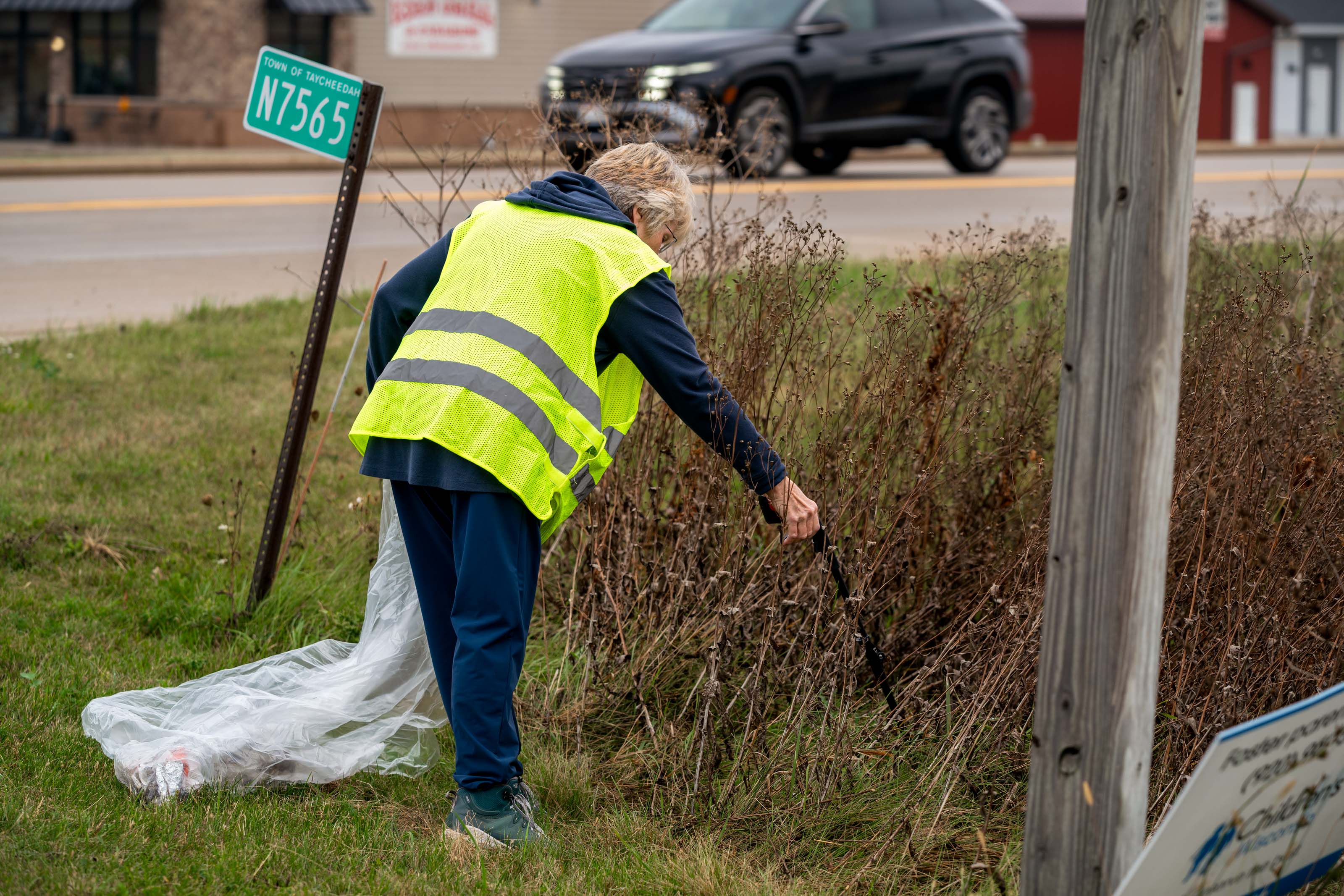
CSA associates are committed to Care for Earth and would love your help protecting local wildlife and waterways.
Save the date to lend a hand at our Adopt-A-Highway pick-up site in 2027:
Apr 24, July 24, Oct 16
Volunteers gather at the Park and Ride lot on the corner of Winnebago Drive and Hwy 151 at 8:30 a.m. and work for 45-60 minutes.
Safety vests and bags are provided.
If you have a ‘reacher’ for picking up items, please bring it. There are a few extra for folks to use.
In the event of questionable weather use good judgment, and don’t hesitate to contact crew chief Joanna Schohl 920-517-1387 with any questions.
New volunteers
Please watch the WI DOT safety video: https://wisconsindot.gov/Pages/doing-bus/real-estate/roadsides/adopt-hwy/safety.aspx
Statement on the Dignity of Human Life and Nonviolence
October 09, 2026
As a member of Leadership Conference of Women Religious (LCWR), the Congregation of Sisters of St. Agnes affirms the following statement.
The Leadership Conference of Women Religious (LCWR) stands against violence in all its forms, including the death penalty. Rooted in our Gospel values and our Declaration of Commitment, we remain steadfast in upholding the inherent right to life of every human being and the dignity of each person. We affirm the importance of due process and accountability for those who have committed grave offenses, while rejecting the taking of human life as a response to wrongdoing.
Life is God’s sacred gift. God is the author of life, and we are called to be co-creators with God, entrusted with nurturing and protecting life, never with bringing it to an end. Even in the face of grave wrongdoing, human dignity remains sacred.
As stated in our Declaration of Commitment, we are called to stand against violence in all its forms and to proclaim the urgent necessity of nonviolence in both word and action. This commitment challenges us to examine how violence is practiced, witnessed, and sometimes normalized in our society.
LCWR strongly opposes the use of public media and social media to broadcast, distribute, or sensationalize the execution of any person. We believe that turning the taking of human life into a public spectacle violates the values we hold in trust and the Gospel that women religious have dedicated their lives to proclaiming. We call upon all people to refuse to watch, share, or circulate such content, recognizing that our participation, even as spectators, can contribute to a culture that diminishes human dignity.
Our commitment to nonviolence also calls us to consider the impact of our daily choices, the words we speak, the images we share, and the ways we respond to the suffering of others. Respect for life requires us to recognize the humanity of every person, including those who have caused great harm, while never forgetting the suffering of victims and their families.
During this Respect Life Month, especially on the World Day Against the Death Penalty, we invite our members, associates, partners in mission, and all people of goodwill to renew their commitment to protecting life, respecting human dignity, and rejecting violence in both word and action.
We invite you to gather in prayer for all those facing execution, for victims of violence and their families, and for the transformation of hearts and systems that perpetuate violence. May our shared prayer deepen our commitment to the Gospel and strengthen our witness to a world in which justice, mercy, and the dignity of every human being are upheld.
Let us pray
God of life and mercy,
You breathed life into each of us
and entrusted us with the care of one another.
Open our eyes to the dignity of every person,
especially those whom society has rejected,
those who have suffered violence,
and those who await execution.
When justice becomes punishment without mercy,
awaken our hearts.
When suffering is met with more suffering,
teach us another way.
Forgive us for the times we have remained silent
in the face of violence, hatred, and humiliation.
Help us recognize how our words,
our actions, and even the images we share
can either wound or protect the dignity of others.
May our hands never become instruments of death,
but vessels of healing.
May our voices speak for those whose voices are silenced,
and may our hearts never forget
that every life carries Your breath.
Teach us to be faithful co-creators with You,
protecting the life we did not give
and have no right to take away.
Give us the courage to reject violence
in both word and action,
the wisdom to choose what nourishes life,
and the compassion to recognize Your presence
in every human being.
May our commitment to justice
always be guided by mercy,
and may our lives bear witness
to the dignity and sacredness of every human life.
Amen
Posted in
Death Penalty & Restorative Justice
October 27 - Tuesday
03:00 PM - 04:00 PM
October 28 - Wednesday
October 29 - Thursday
October 30 - Friday
October 31 - Saturday
November 1 - Sunday
November 2 - Monday
November 3 - Tuesday
12:00 AM - 11:59 PM
November 4 - Wednesday
November 5 - Thursday
November 6 - Friday
November 7 - Saturday
09:15 AM - 11:30 AM
01:00 PM
November 8 - Sunday
November 9 - Monday
November 14 - Saturday
November 15 - Sunday
04:00 PM - 05:00 PM
November 17 - Tuesday
03:00 PM - 04:00 PM
December 5 - Saturday
09:15 AM - 11:30 AM
01:00 PM
December 13 - Sunday
04:00 PM - 05:00 PM