
Bending the Arc references a quote by Rev. Dr. King who said, “The arc of the moral universe is long, but it bends toward justice.” This digital newsletter from the CSA Justice, Peace, and Integrity of Creation office showcases the work of changemakers, opportunities to learn, and opportunities for you to help “bend the arc” toward justice. Full contents of the newsletter are published on this page.
Subscribe to get Bending the Arc in your inbox.
Extending Producer Responsibility Towards Zero Waste
November 26, 2025
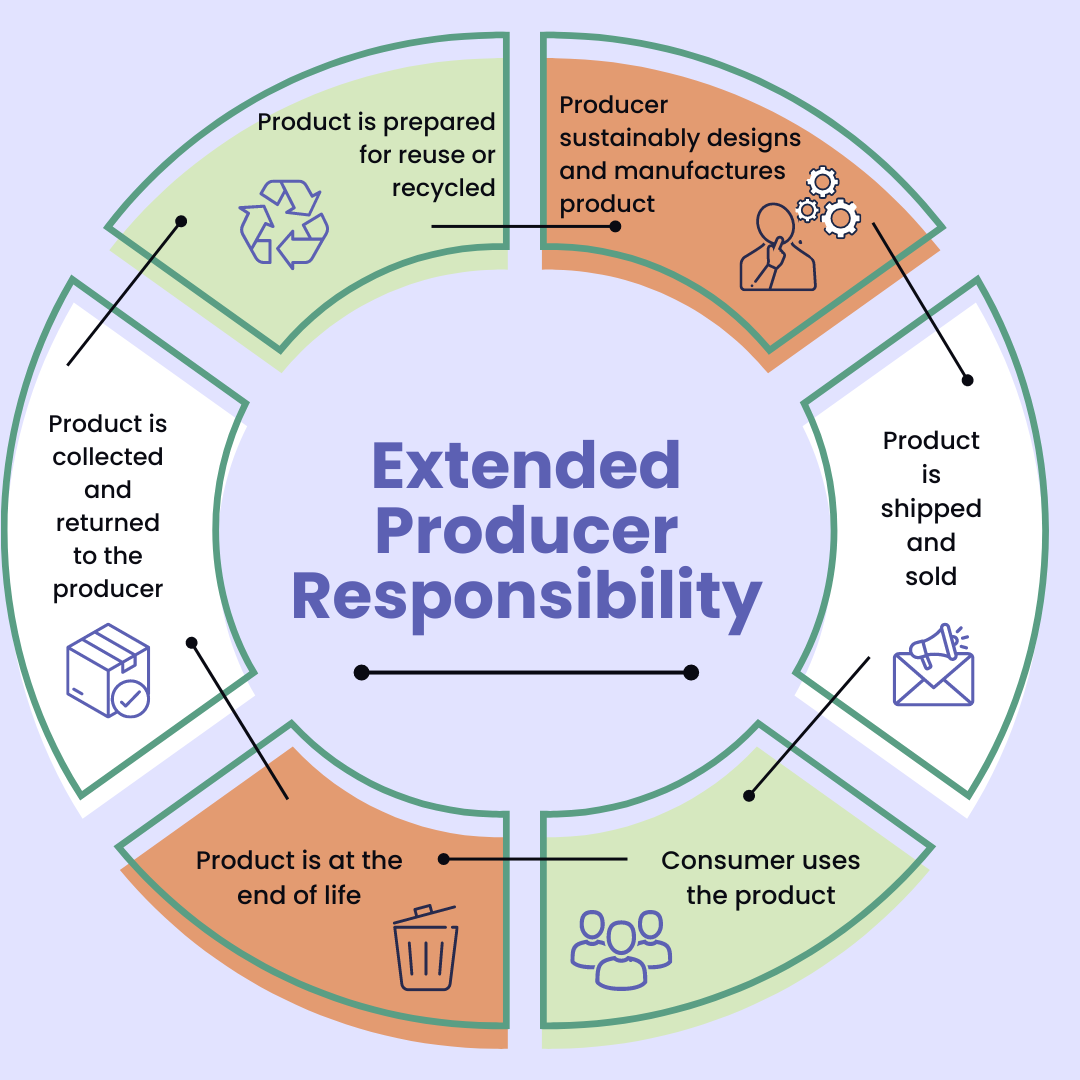
Who is responsible for materials too often easily discarded? From design to disposal, Extended Producer Responsibility (EPR) laws say manufacturers are. Could this be the solution toward zero waste?
In a recent article by Dr. Julie Peller, writer for Green Junction, a weekly column of the Creation Care Ministry of the Gary, Indiana Archdiocese, Julie provides good information and a call to action. She writes:
“Recycling and repurposing are methods for processing materials that keep valuable resources in use. These are mostly opposite to the common linear system of goods where materials are used and then discarded. In order to pivot to systems that keep resources in circulation, governments are turning to extended producer responsibility (also known as EPR). It is an effective means to reduce waste, value resources and hold producers of materials accountable.
A number of countries and states have formulated EPR or are determining ways to implement EPR laws. The Product Stewardship Institute is an organization leading these efforts and documenting productive changes. Batteries are a prime example of materials that should not be discarded after their use since they contain valuable resources such as manganese and zinc. Additionally, metals used in batteries are mined using energy-intensive processes and many batteries contain hazardous materials, including cadmium and lead. A number of states have enacted battery EPR laws that cover single use and rechargeable batteries. Last year, the state of Illinois initiated its “Portable and Medium-Format Battery Stewardship Act.” This created a statewide program where battery producers are required to “fund and manage the collection, transportation, and recycling of portable primary and rechargeable batteries, as well as medium-format batteries.”
The Product Stewardship Institute lists numerous materials (including plastics) that should be part of reclaim and reuse systems through EPR. The institute anticipates a need to address newer materials that contain valuable resources, such as solar panels, and encourage a return and repurpose system with producer responsibility. “Globally, an estimated 86 million tons of photovoltaic waste from solar panels will be generated by 2050 – representing $15 billion worth of precious metals, rare earth elements, aluminum, and glass that could be recycled.” Currently, the state of Washington is the only state that has established EPR for solar panels.
In the season of thanksgiving, it is good to remember the natural resources that make our lives better and commit to using them in the most responsible manner. Encourage your elected officials to support EPR for many of our materials."
Posted in
Cosmology & Creation