
Bending the Arc references a quote by Rev. Dr. King who said, “The arc of the moral universe is long, but it bends toward justice.” This digital newsletter from the CSA Justice, Peace, and Integrity of Creation office showcases the work of changemakers, opportunities to learn, and opportunities for you to help “bend the arc” toward justice. Full contents of the newsletter are published on this page.
Subscribe to get Bending the Arc in your inbox.
Emerging Global Trends of Human Trafficking
May 01, 2026
The theme of this year’s Alliance to End Human Trafficking (AEHT) conference was United in Prevention: Current Trends and Prevention Strategies. The conference was held in Boston, MA, April 15-17, 2026.
Conference workshops and speakers gave insight to the many vulnerabilities for trafficking around the world, but what was most impactful were hearing from survivors. Their experiences bring a raw reality to the gravity of this issue. Human trafficking is the second most lucrative form of transnational crime in the world, only second to drug trafficking. Annual profits from human trafficking and forced labor are estimated at $236 billion globally. Think about this - the sale of a pound of drugs is one transaction, but a person can be sold multiple times. Human trafficking is becoming more hidden, organized, and transnational.
Here are the some global trends being reported:
- Criminal networks use advanced methods to avoid being detected
- Digital recruitment targets vulnerable young people through social media with false job promises.
- Forced labor is on the rise in supply chains around the world
- Consumers often remain unaware of forced labor practices.
- Migration remains one of the strongest pathways to vulnerability.
- Women, children, migrants, and indigenous people are the most affected.
Human trafficking varies by region due to local conditions and global influences. Here in North America, migrant, agricultural workers and Indigenous communities face systemic risks rooted in historical inequities and policy gaps. Temporary visa programs can offer legal work, but they can also create power imbalances that traffickers take advantage of. Understanding these patterns is crucial for creating affection prevention strategies that address root causes and protect vulnerable populations.
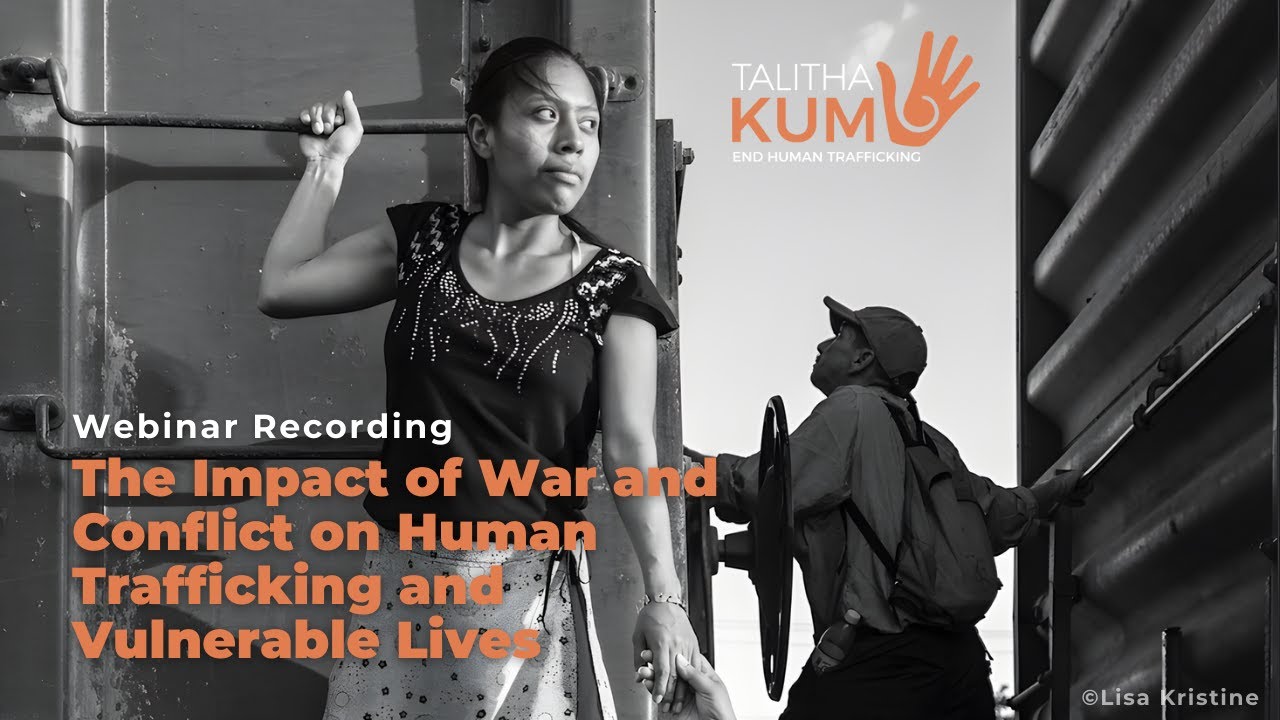
Sister Jean Quinn, DW, Executive Director of UINANIMA International echoed many of these trends, realities, and experiences that the conference presenters shared when she asked to be the keynote speaker for the Talitha Kum presentation, Systemic Change in the Face of New Vulnerabilities to Human Trafficking on April 23, 2026. You are encouraged to watch the recording here.
Sister Jean reiterates that the voices of survivors are essential in creating just systems, designing policy and program development, avoiding criminalizing victims, and to create genuine community-specific approaches to the problems. Honoring lived experiences reveals where systems have failed.
The AEHT Conference ended with a Call to Action that all anti-trafficking advocates are encouraged to commit to:
As we conclude, let us commit to concrete action. True prevention requires collaboration across borders, sectors, and communities.
We call upon all stakeholders to:
- Advocate for policy reform that protects the vulnerable
- Empower local communities through education, resources and sustainable opportunities
- Partner with survivors whose voice must guide our strategies
- Support faith-based networks working at the grassroots level
To be truly united in prevention means recognizing our shared responsibility. Because protecting human dignity anywhere requires responsibility everywhere.
Posted in
Trafficking & Migration